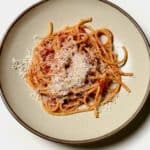
Bucatini Amatriciana
A classic pasta dish made with pancetta, tomatoes, and a touch of heat from red pepper flakes. This simple Roman pasta comes together quickly and relies on a few key ingredients for big, bold flavor.
Servings: 4
Equipment
Ingredients
- 1 tablespoon Extra Virgin Olive Oil
- 4 ounces Pancetta diced into small cubes
- 1 teaspoon Red Pepper Flakes adjust to taste
- 1 tablespoon Tomato Paste
- 3 cloves Garlic minced
- ⅓ cup Dry White Wine
- 28 ounces San Marzano Whole Peeled Tomatoes
- ¼ cup Parmigiano-Reggiano freshly grated (plus more for serving)
- 1 pound Bucatini
- Kosher Salt & Black Pepper to taste
Instructions
- Render pancetta: Heat olive oil in a large high-rimmed sauté pan over medium-high heat. Add the pancetta and red pepper flakes and cook, stirring often, until the pancetta begins to render and lightly brown.
- Build flavor and deglaze: Lower the heat to medium. Stir in the tomato paste and cook for about 2 minutes until slightly darkened. Add the garlic and cook for 30 to 60 seconds, stirring constantly. Pour in the white wine and scrape up any browned bits from the bottom of the pan. Cook until most of the wine has reduced.
- Simmer sauce: Add the whole peeled tomatoes, crushing them by hand or with a wooden spoon or potato masher. Season with salt and pepper and bring to a gentle simmer. Reduce the heat slightly and let the sauce cook while you prepare the pasta.
- Cook pasta: Bring a large pot of well-salted water to a boil. Cook the bucatini until about 1 minute shy of al dente.
- Combine: Use tongs to transfer the pasta directly into the sauce, allowing some pasta water to come with it. Toss well to coat, adding more pasta water as needed until the sauce clings to the noodles.
- Finish and serve: Turn off the heat and stir in the grated cheese. Serve immediately with more grated cheese on top.
Notes
- Cheese choice: Pecorino Romano is traditional for amatriciana. Parmigiano-Reggiano works well and is what I use most often.
- Pancetta vs guanciale: Guanciale is traditional, but pancetta is easier to find and still delivers great flavor.
- White wine: Use a dry white wine you enjoy drinking, such as Sauvignon Blanc or Pinot Grigio.
- Tomatoes: Whole peeled tomatoes can be crushed before adding to the pan or crushed directly in the pan using a wooden spoon or potato masher.
- Pasta shape: Bucatini is classic, but other long pasta shapes like spaghetti or linguine can be used. Short shapes such as rigatoni or penne also work.
- Pasta water: Transferring the pasta directly into the sauce helps emulsify and coat the noodles. Add more pasta water as needed until the sauce clings.
Nutrition
Calories: 653kcal | Carbohydrates: 95g | Protein: 23g | Fat: 18g | Saturated Fat: 6g | Polyunsaturated Fat: 3g | Monounsaturated Fat: 8g | Trans Fat: 0.04g | Cholesterol: 23mg | Sodium: 620mg | Potassium: 761mg | Fiber: 6g | Sugar: 9g | Vitamin A: 501IU | Vitamin C: 20mg | Calcium: 170mg | Iron: 4mg
