Bucatini Amatriciana (Ready in 30 Minutes!)

Updated Jan 08, 2026
This post may contain affiliate links. Please read our disclosure policy.
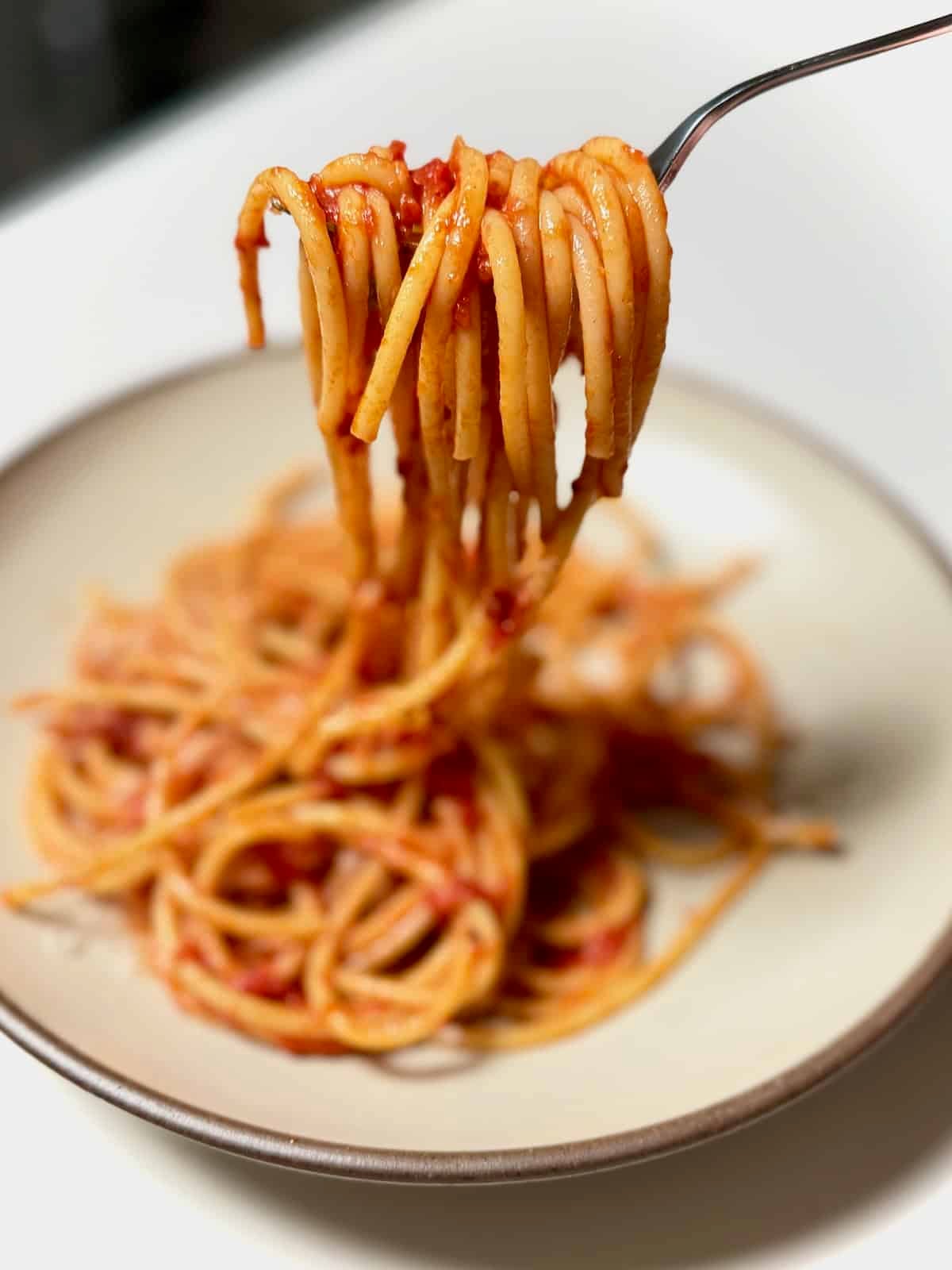
This Bucatini Amatriciana is a classic Roman pasta that comes together in about 30 minutes and relies on a few key ingredients for big, bold flavor. This version stays true to the spirit of the traditional dish while using ingredients that are easy to find.
Looking for more classic pasta recipes? Try my Lasagna with Béchamel or Pasta alla Vodka next.
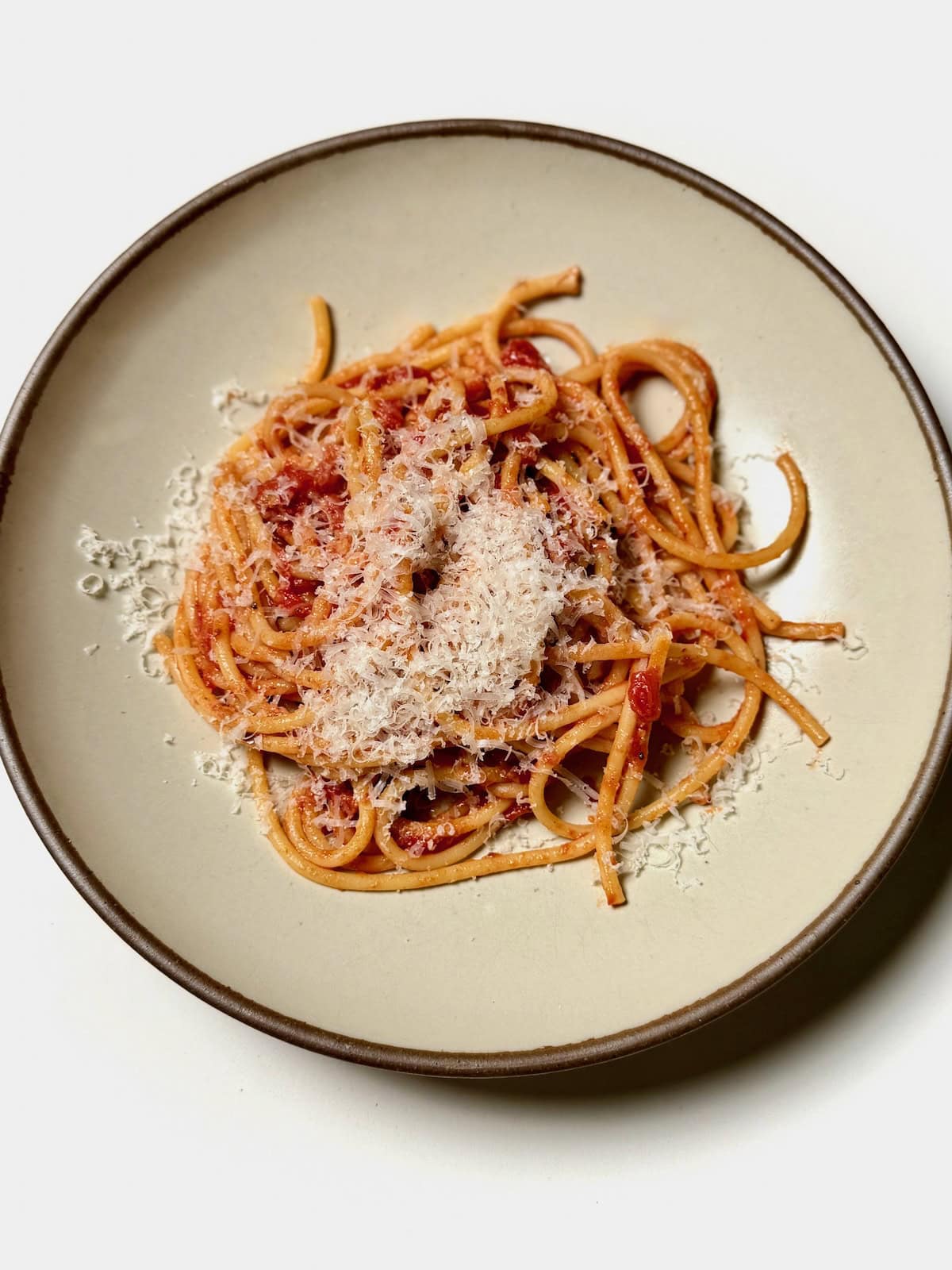
🐝 Quick Look: Bucatini Amatriciana Recipe
- ⏱ Prep Time: 10 minutes
- 🔥 Cook Time: 20 minutes
- ⏳ Total Time: 30 minutes
- 🍽 Serves: 4
- ⚡ Calories: ~653 per serving
- 🍳 Cook Method: Stovetop simmered sauce
- 🧂 Main Ingredients: Pancetta, bucatini, San Marzano tomatoes, red pepper flakes
- 👩🍳 Flavor Profile: Savory, rich tomato sauce with subtle heat
- ⭐ Difficulty: Easy. Classic technique with simple ingredients
SUMMARIZE & SAVE THIS CONTENT ON
Why You’ll Love This Recipe
- Classic Italian flavors with minimal ingredients using a short list of pantry staples that come together into a bold, savory sauce. Try this Lemon Cacio e Pepe for another pasta dish with minimal ingredients.
- Ready in about 30 minutes, making this an ideal pasta for busy weeknights without sacrificing flavor. Creamy Mushroom Pasta is another 30 minute recipe to check out next.
- Bucatini holds the sauce beautifully, thanks to its hollow center, so every bite is coated in rich tomato sauce. I love using bucatini in my Garlic Butter Noodles recipe as well.
- Easy to make at home with ingredients that are widely available, even if you don’t have access to traditional guanciale.
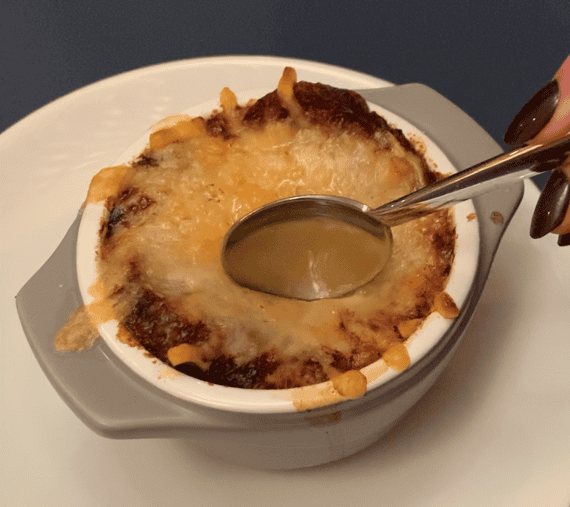
- Comforting yet elevated, perfect for a cozy dinner at home or serving to guests when you want something simple but impressive. Serve with a cup of French Onion Soup as a starter for a flavor-packed meal.
Table of Contents
Key Ingredients
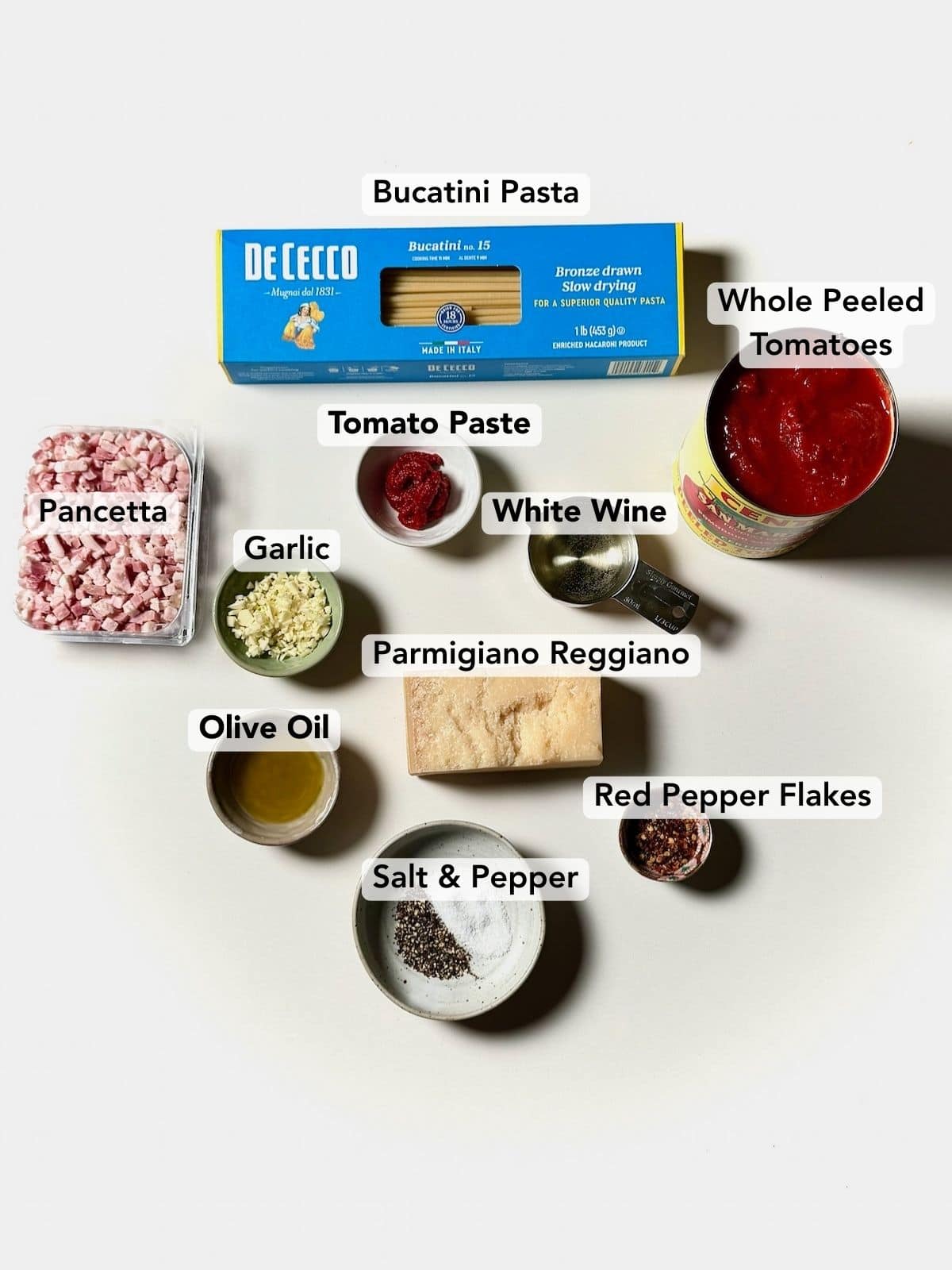
See the recipe card below for the complete list of ingredients with exact quantities.
- Bucatini: Bucatini is the traditional pasta used in amatriciana. Its long, hollow shape helps trap the sauce so every bite is coated.
- San Marzano Whole Peeled Tomatoes: A can of these tomatoes creates a smooth, balanced sauce with great tomato flavor. Using whole tomatoes lets you control the texture by crushing them by hand or with a potato masher or wooden spoon directly in the pan.
How to Make Bucatini Amatriciana
See the recipe card below for full instructions and exact amounts.
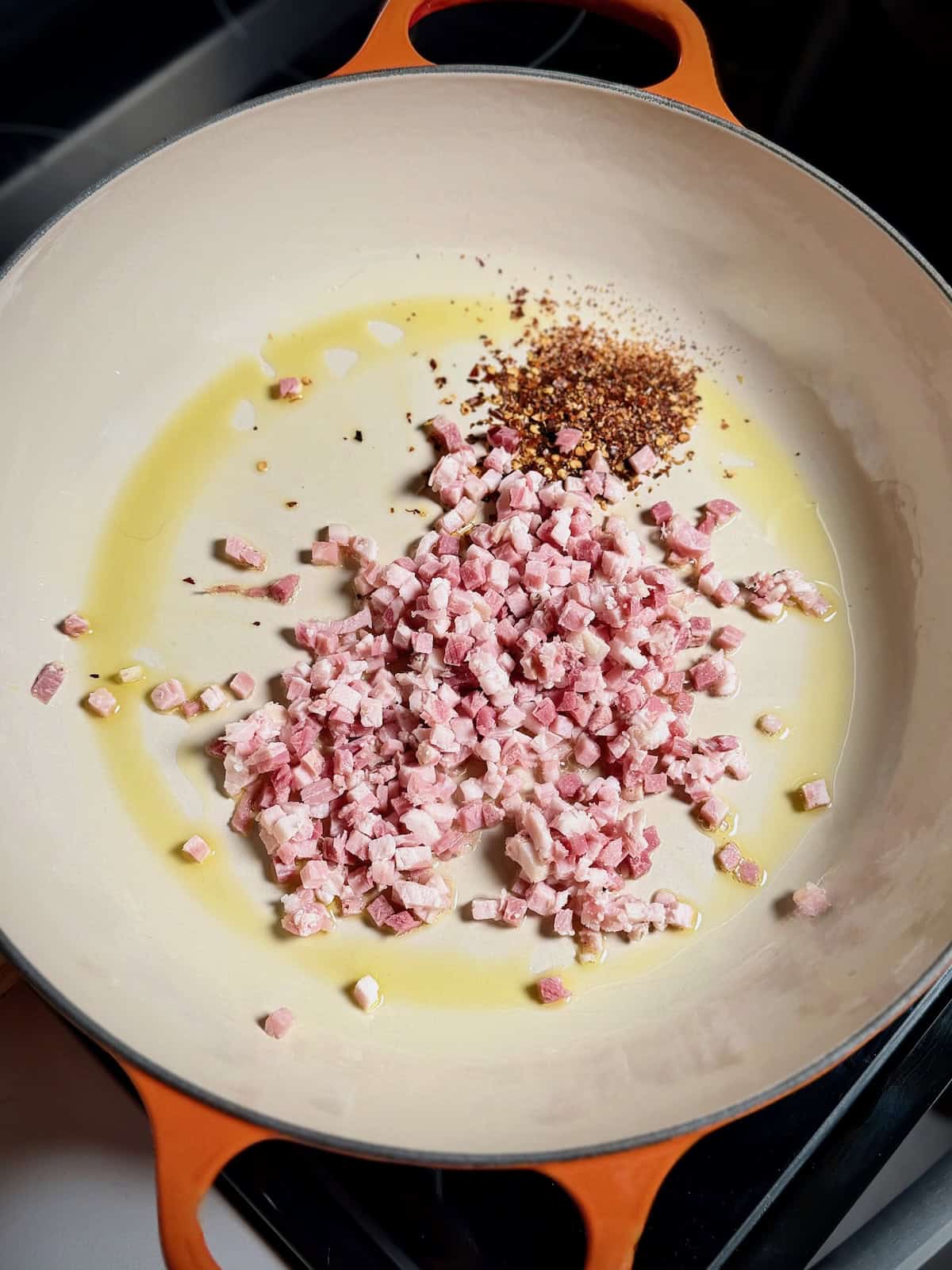
- Add the pancetta and red pepper flakes to olive oil.
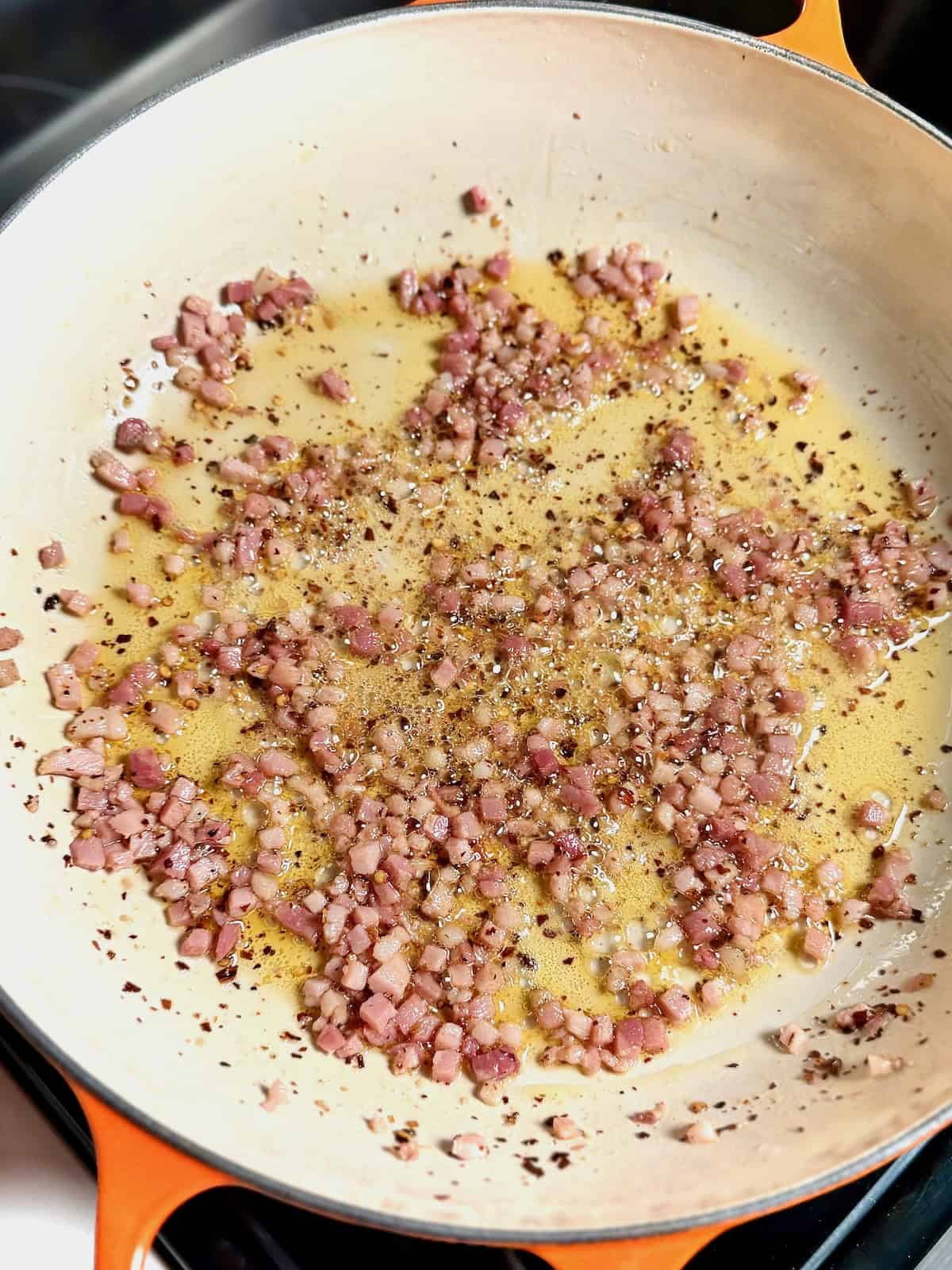
- Cook, stirring often, until the fat renders and the pancetta lightly browns.
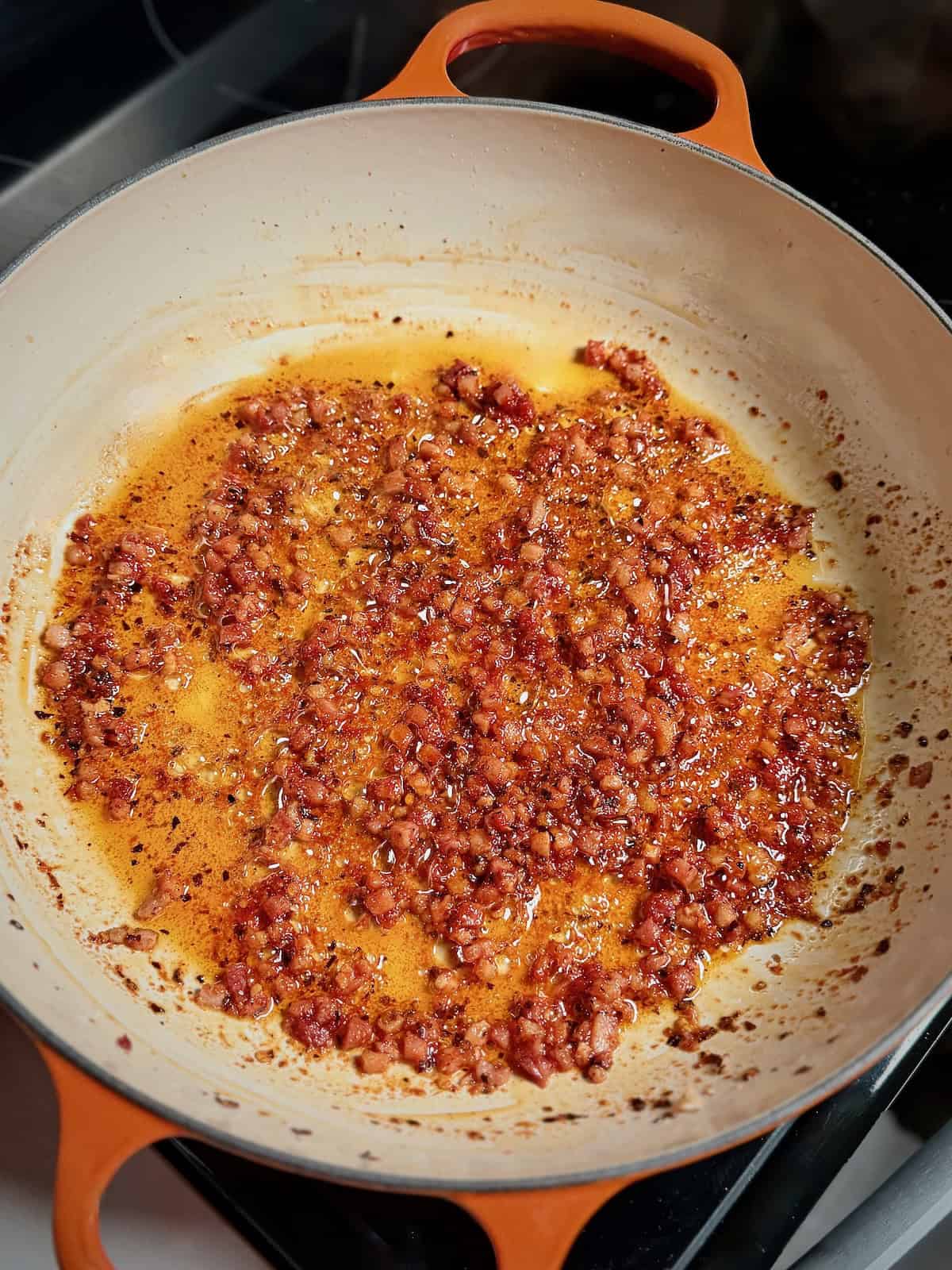
- Stir in the tomato paste and cook until it darkens slightly. Add the garlic and cook briefly, then deglaze the pan with white wine.
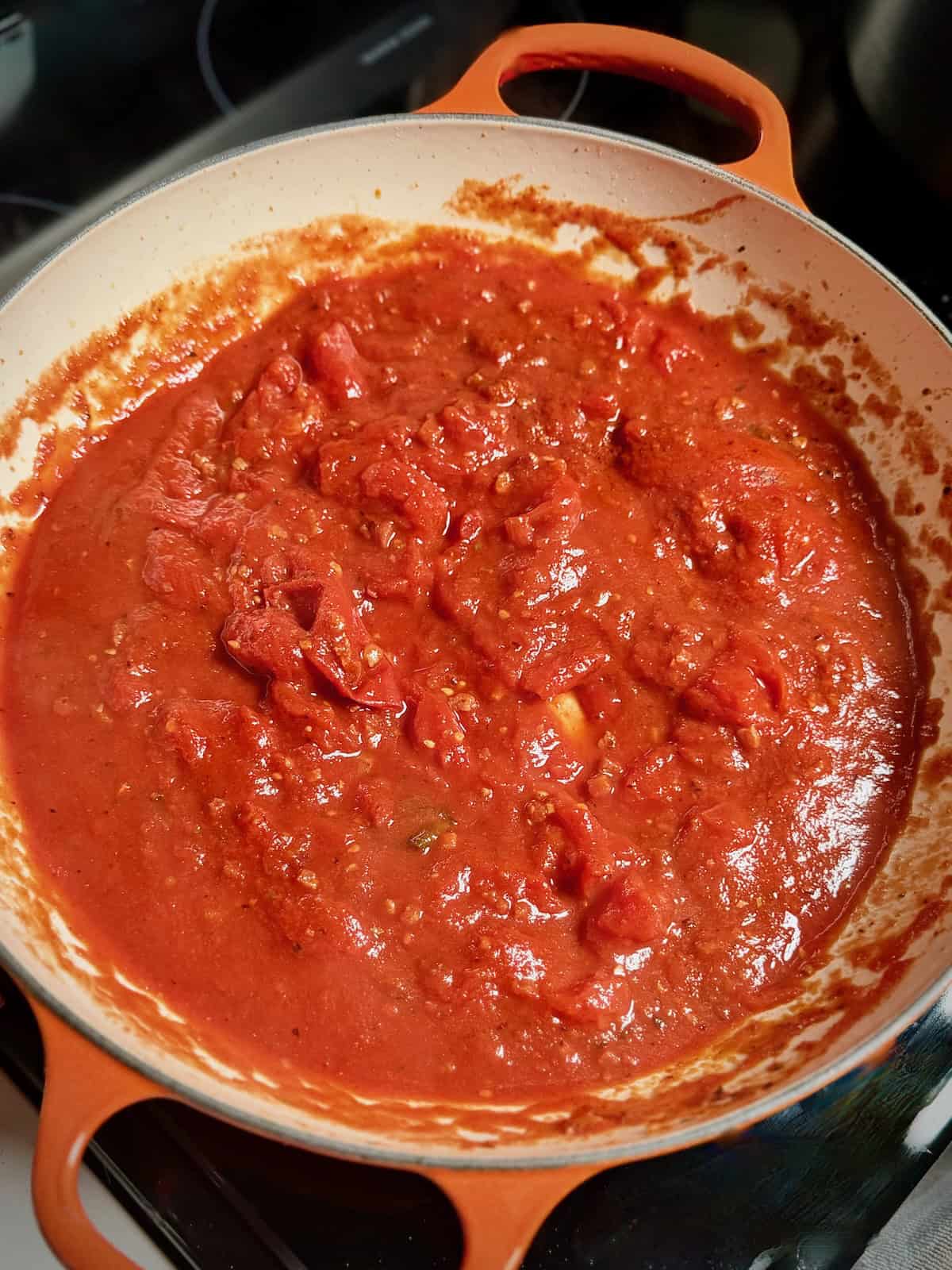
- Add the tomatoes, crushing them by hand or with a masher, then simmer until the sauce thickens slightly while the pasta cooks.
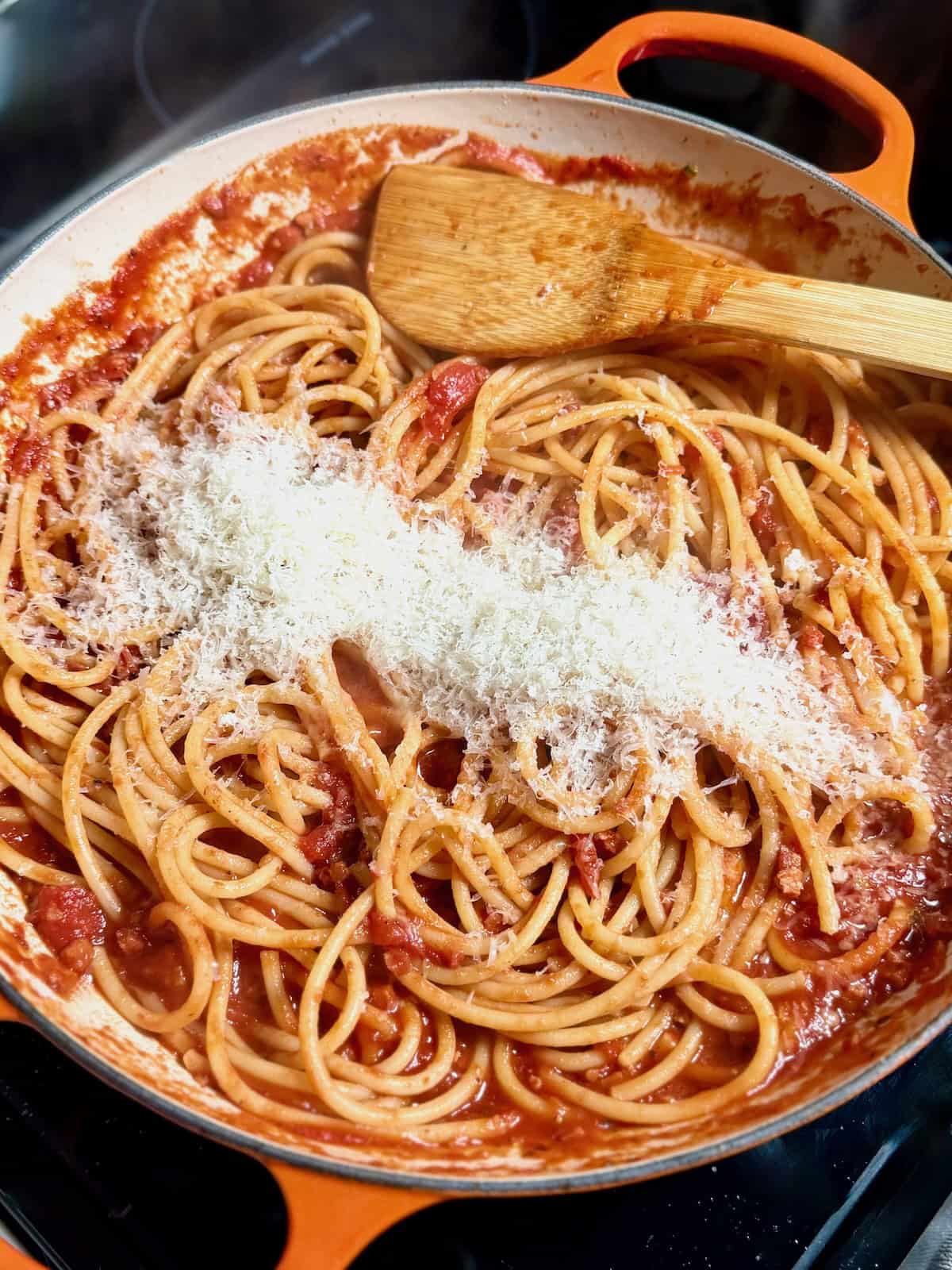
- Cook the pasta then add directly to the sauce and toss with grated cheese until coated.
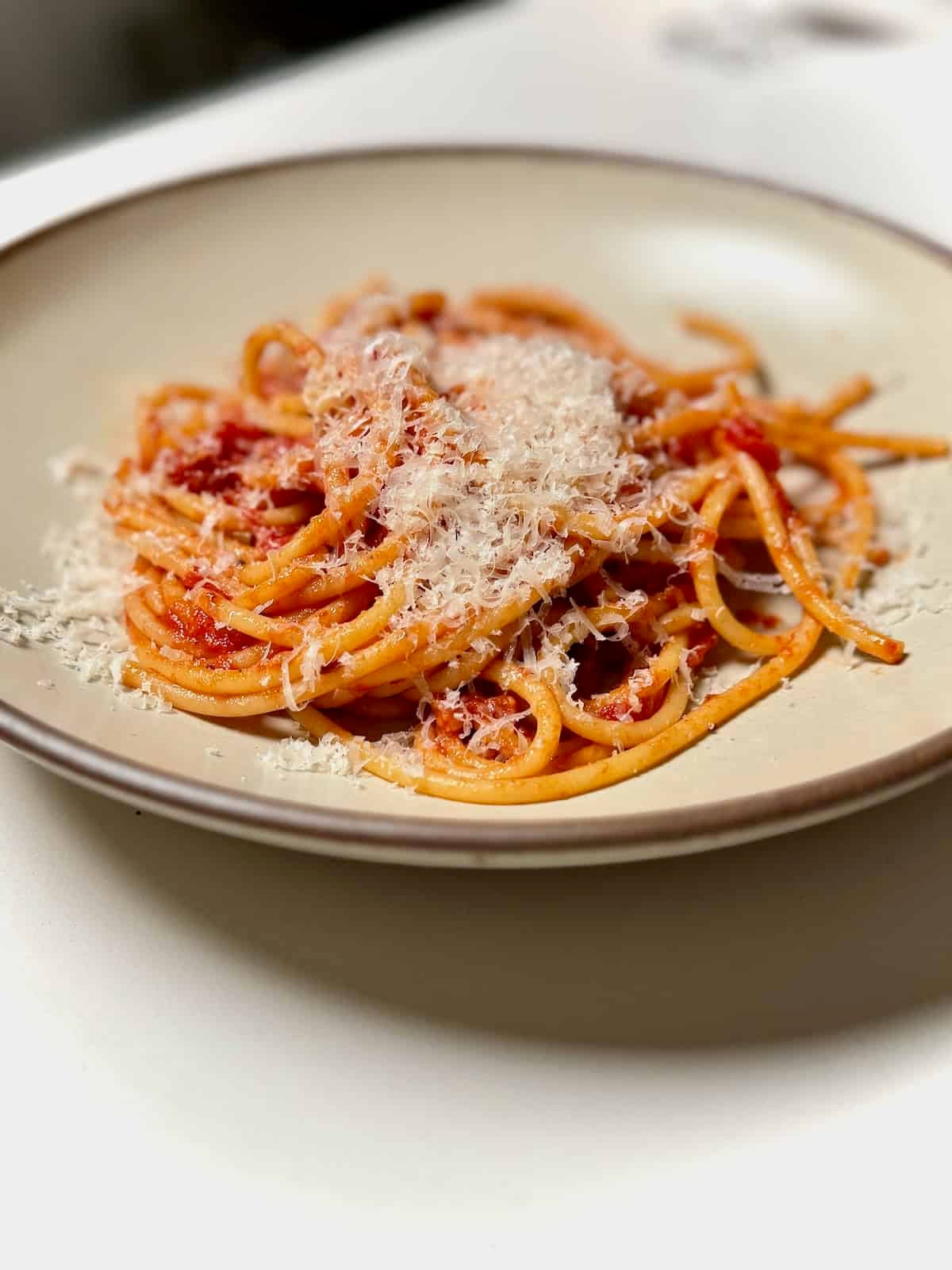
- Plate the pasta and finish with more grated cheese before serving.
Bucatini Amatriciana FAQs
A classic Roman pasta dish made with bucatini, a tomato-based sauce, cured pork such as guanciale or pancetta, pecorino or parmesan cheese, and red pepper flakes. It’s known for its simple ingredients and bold, savory flavor.
Bucatini is the traditional choice because the hollow center helps hold the sauce. Other long pasta shapes like spaghetti or linguine work well, and short shapes such as rigatoni or penne can also be used.
Guanciale is traditional, but pancetta is more widely available and still delivers great flavor. Both work well in this recipe.
Store leftovers in an airtight container in the refrigerator for up to 3 days. Reheat gently on the stovetop with a splash of water to loosen the sauce, or microwave in short intervals, stirring in between, until warmed through. The pasta will continue to absorb the sauce as it sits, but leftovers still reheat well.
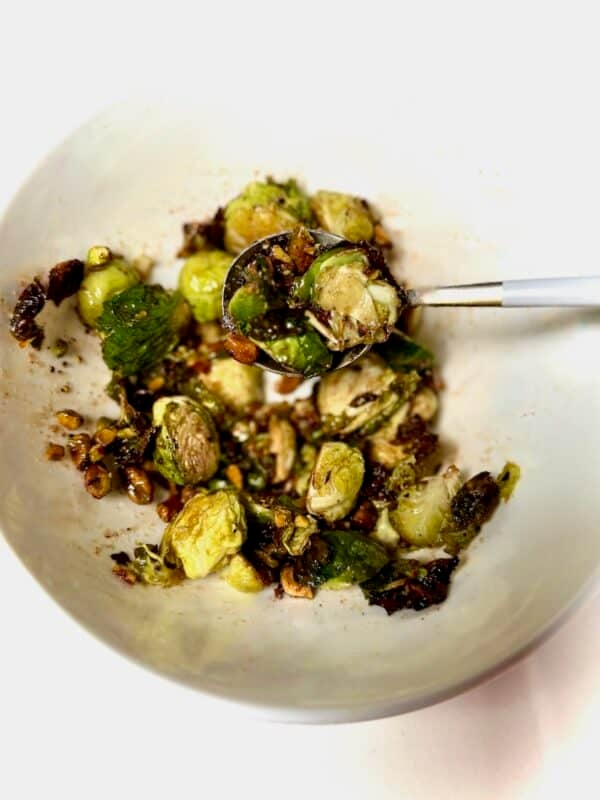
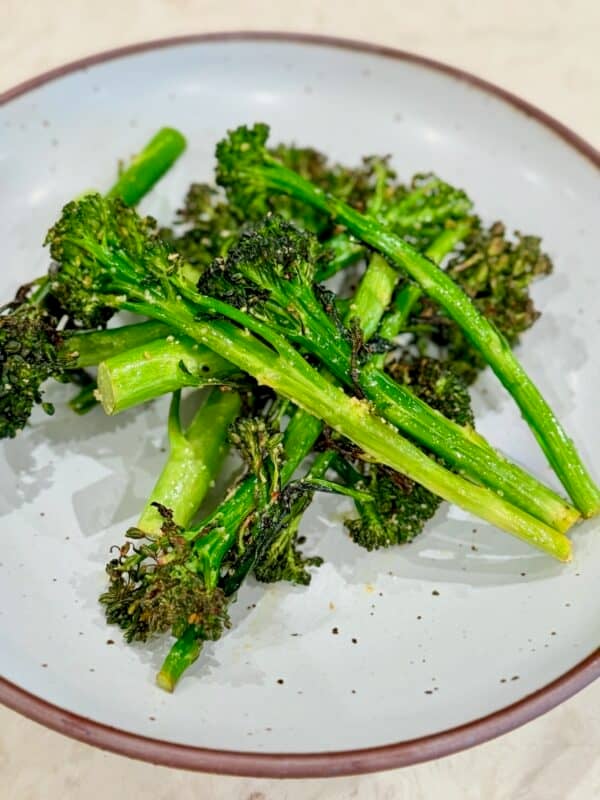
Recommended Sides to Consider


Bucatini Amatriciana
Equipment
Ingredients
- 1 tablespoon Extra Virgin Olive Oil
- 4 ounces Pancetta, diced into small cubes
- 1 teaspoon Red Pepper Flakes, adjust to taste
- 1 tablespoon Tomato Paste
- 3 cloves Garlic, minced
- ⅓ cup Dry White Wine
- 28 ounces San Marzano Whole Peeled Tomatoes
- ¼ cup Parmigiano-Reggiano, freshly grated (plus more for serving)
- 1 pound Bucatini
- Kosher Salt & Black Pepper, to taste
Instructions
- Render pancetta: Heat olive oil in a large high-rimmed sauté pan over medium-high heat. Add the pancetta and red pepper flakes and cook, stirring often, until the pancetta begins to render and lightly brown.
- Build flavor and deglaze: Lower the heat to medium. Stir in the tomato paste and cook for about 2 minutes until slightly darkened. Add the garlic and cook for 30 to 60 seconds, stirring constantly. Pour in the white wine and scrape up any browned bits from the bottom of the pan. Cook until most of the wine has reduced.
- Simmer sauce: Add the whole peeled tomatoes, crushing them by hand or with a wooden spoon or potato masher. Season with salt and pepper and bring to a gentle simmer. Reduce the heat slightly and let the sauce cook while you prepare the pasta.
- Cook pasta: Bring a large pot of well-salted water to a boil. Cook the bucatini until about 1 minute shy of al dente.
- Combine: Use tongs to transfer the pasta directly into the sauce, allowing some pasta water to come with it. Toss well to coat, adding more pasta water as needed until the sauce clings to the noodles.
- Finish and serve: Turn off the heat and stir in the grated cheese. Serve immediately with more grated cheese on top.
Notes
- Cheese choice: Pecorino Romano is traditional for amatriciana. Parmigiano-Reggiano works well and is what I use most often.
- Pancetta vs guanciale: Guanciale is traditional, but pancetta is easier to find and still delivers great flavor.
- White wine: Use a dry white wine you enjoy drinking, such as Sauvignon Blanc or Pinot Grigio.
- Tomatoes: Whole peeled tomatoes can be crushed before adding to the pan or crushed directly in the pan using a wooden spoon or potato masher.
- Pasta shape: Bucatini is classic, but other long pasta shapes like spaghetti or linguine can be used. Short shapes such as rigatoni or penne also work.
- Pasta water: Transferring the pasta directly into the sauce helps emulsify and coat the noodles. Add more pasta water as needed until the sauce clings.
Nutrition
Nutrition information is automatically calculated, so should only be used as an approximation.







So good! Great rendition on a classic. Great flavor and comes together so quickly and easily. Will be making again soon!
This dish is so simple to make, but it’s PACKED with flavor and a little bit of heat. I hope you love it!